Mechanics of agentic procurement
How AI agents solve the procurement dilemma, reach more suppliers, and create negotiation leverage.
How agents solve the procurement dilemma
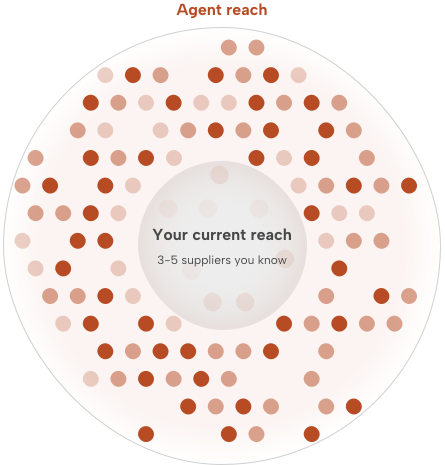
Your bandwidth limits how much of the market you can reach. You're stuck with a handful of distributors or manufacturers you already know. Agents scale outreach to hundreds of suppliers simultaneously. Direct manufacturers and better distributors compete; the best price wins regardless of channel.
Why search agents find more suppliers
A single platform only shows its own suppliers; most teams are limited to one or two sources. The agent's context wraps every data source: directories, trade associations, marketplaces, ERPs, spreadsheets. One unified query runs across all of them. Result: a merged, deduplicated shortlist in one pass.
Why parallel negotiations create leverage
Traditional negotiation is sequential: Supplier A, then B, then C. Each only knows their own conversation; no competitive pressure. With agents:
- Multiple concurrent discussions; while A considers your counter, the agent negotiates with B and C
- Suppliers don't know they're competing; the agent does
- Prices move toward market reality; more parallel threads mean prices closer to the true market floor
The competitive cost of inaction
Every quarter you wait, contracts auto-renew and prices drift up. Competitors who act capture savings that compound; their cost structure improves while yours stays flat. The gap becomes a structural disadvantage: they have margin to invest, you don't.
See what this looks like for your SKUs →
Acting now frees up spend.
Acting now captures savings that compound quarter over quarter.